


The Scottish Election: What do the party manifestos say about preventing poor health outcomes?
With the Scottish election on 7th May, it’s worth considering how the political parties considered and addressed primary prevention, especially with regards to healthcare, health-harming products, housing and homelessness, employment, and household costs and childcare. Prevention has been an important part of the Scottish policy discussion for the last 15 years and it’s worth considering how this will carry forward.
As of this writing, there are six parties which are predicted to win seats in the election on 7th May. These are the Scottish National Party (SNP), Reform UK, Labour, the Scottish Greens, the Liberal Democrats, and the Conservative and Unionist Party. At present, it’s likely that SNP will retain leadership of the Scottish Parliament, although it’s not clear whether they’ll win the 65 seats needed for a majority, nor is it clear how many seats other parties will gain.
All parties had a range of policies which could likely fall under primary prevention. Looking across these policy areas, we assessed each manifesto for the overall quality of preventative policy goals, their cost and feasibility, and how joined-up different policy areas are.
Introduction
Over the last few decades, the Scottish Government has repeatedly heard calls to adopt a preventative focus for the long-term fiscal sustainability of the country (and the NHS in particular). These include reports like 2011’s Christie Commission on the Future Delivery of Public Services, work from Audit Scotland on public service reform, and our own ongoing series, Prevention Watch.
A “preventative focus” is a broad concept, and we’ve found that often, different groups (even those within government) mean entirely different things when discussing prevention. Public Health Scotland, helpfully, has an overview of three tiers of prevention:
- Primary prevention, which addresses the social, economic, and environmental determinants of health,
- Secondary prevention, which can be thought of early detection or intervention, to treat health conditions at an early stage, and
- Tertiary prevention, which attempts to minimise the harms of a health condition through treatment.
Therefore, the “preventative focus” that we explore, and that has been championed by other groups, centres on primary preventative policies. These policies can cover topics like employment, housing, poverty, education, and social inclusion, among others. Often, policies in this area do not address health at all, but in the long run, can have a significant and positive impact on our lives.
From a financial standpoint, taking a preventative stance makes a lot of sense. Policies in this space can have economic benefits, allowing people to work more consistently throughout their lives. Preventative interventions can also be cost-effective, with small investments potentially resulting in large savings across multiple systems. This is especially noteworthy when considering potential savings for the NHS, which accounts for more than 35% of the total Scottish budget.
Preventative policies are also worthwhile considering for their own sake: after all, why wouldn’t we want to live better, longer lives, with better quality housing, sustainable employment, manageable household budgets, and vibrant communities?
1. Overall assessment: How well did the parties address primary prevention?


2. Prevention and healthcare
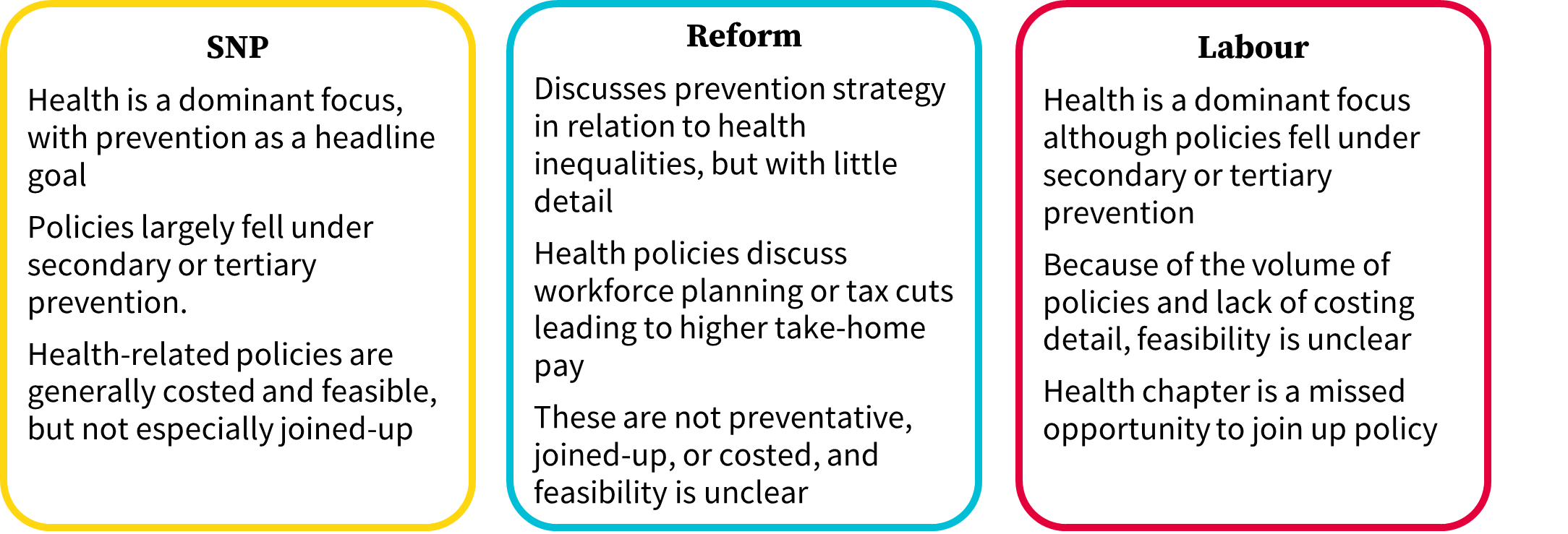

Health was a major focus of the SNP, Labour, and Green party manifestos, although much of the discussions in health-focused chapters fell under secondary or tertiary prevention. This is not necessarily an issue when primary preventative policies are considered elsewhere; the Greens even acknowledged this, saying that they “want to tackle Scotland’s poor public health by investing in prevention and early intervention,” but that they “also recognise the importance of protecting funding to secondary and acute care.”
We would nevertheless expect that the parties acknowledge that, in the long run, primary preventative policies are crucial to NHS fiscal sustainability.
The level to which these will be effective is up for debate: a key criticism of the current Scottish Government is that preventative policy often falls into specific siloes, hampering their ability to effectively address the myriad of issues that cross policy lines. While the recent Population Health Framework and Public Sector Reform strategy aim to address this problem, we have yet to see changes.
Most of the manifestos also explored policy surrounding health-harming products, chiefly alcohol, tobacco, vaping, drugs, and unhealthy food, although there was a clear divide in the parties’ approaches. Overall, there’s surprisingly little detailed discussion of policy responses to alcohol, beyond Minimum Unit Pricing (MUP), despite Scotland’s poor record of alcohol deaths.
Party-level overview
Health-related policies covered by the SNP include initiatives like “health MOTs” for adults over 40, investments in community diagnostics, and improvements in the accessibility of screening, diagnosis and early treatment. Another promise covered online booking; this was also part of the 2021 SNP manifesto and has not been delivered. These proposals are all clearly in the secondary and tertiary prevention space.
Reform’s manifesto was the shortest of the bunch and lacked detail. In their health chapter, they said that they will establish a commission to deliver action plans on “a shift to a prevention strategy in persistent health inequalities,” but they do not provide any further detail on what this might entail. Another point they make – that heath spending has increased by 6% annually over the last 25 years – is misleading; accounting for inflation, spending has increased by around 3.1% annually over the last quarter century. Their concern about the sustainability of this cost is valid, however, but their only set plans for improvements largely centre on income tax cuts resulting in higher take-home pay for medical staff, along with “removing inept and bureaucratic management.”
Looking to Labour’s manifesto, the health section seems like somewhat of a missed opportunity: there is a staggeringly high number of policies, with ten pages of bullet points covering a wide range of topics, yet sections titled “helping people live well” largely covers access to health services, whilst “promoting healthy lifestyles” covers diet and smoking. Both of these are valid in the primary preventative space (and explored further below), but don’t necessarily address inequalities in the way we’d expect. Labour aims to raise health and social care spending to at least £25 billion (approximately £4 billion more than at present) but does not say where that money will actually come from.
The only party that really discussed the socioeconomic determinants of health were the Lib Dems, who covered topics like employment, disability, and social inclusion in their health chapter, and specifically stating that their “priorities are to […] Take pressure off the NHS by promoting preventative health.” Some of the included policies were highly specific to regions and conditions, highlighting specific hospitals that need to be rebuilt and discussing issues related to Long Covid and ME.
Finally, the Conservative party was the only one that did not mention prevention with regards to health. Plans for improvements to the NHS include things like increasing GP funding, reducing waiting lists, and increasing mental health centres and targeted screening services. In general, they discussed improvements to the NHS through reductions in management and administrative costs, similar to (albeit more detailed than) Reform’s proposals. Again, this is a valid concern, and issues with bureaucracy are also echoed across throughout other party manifestos. A key question, however, would be whether or not this is sufficient to free up the millions of pounds that are needed to implement their planned programmes.
3. Health harming products
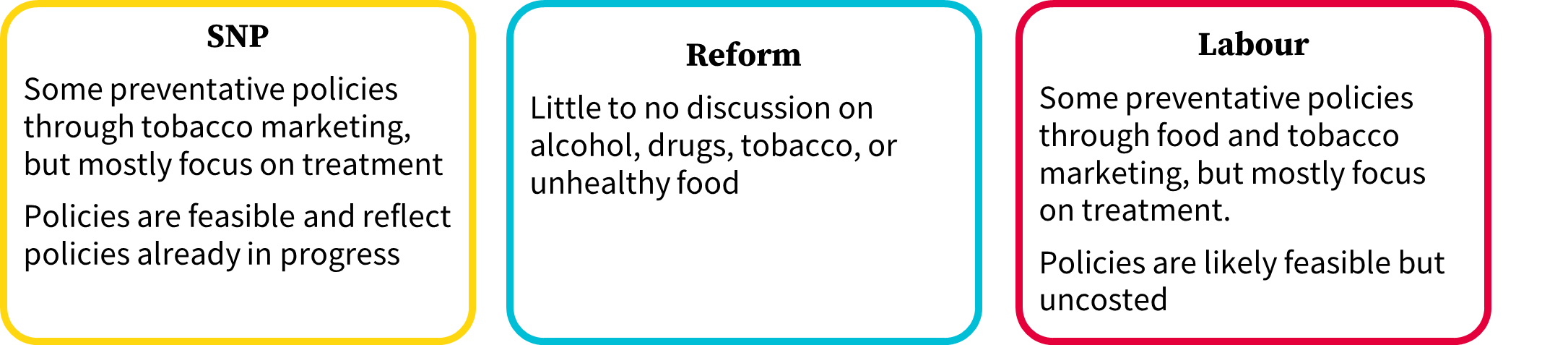

At one end, the Greens take a very comprehensive public health view: strong regulation of products and marketing, combined with harm reduction and a willingness to tackle industry influence directly. This manifesto had the most extensive discussion on regulating the industries that profit from these products. Their policies covered topics including uprating the alcohol MUP automatically in line with inflation, alcohol and vape marketing restrictions, and expanding drug harm reduction through initiatives like consumption rooms, making naloxone (used to treat opioid overdoses) more accessible, and drug checking, with longer-term moves toward decriminalisation of drugs. They also discussed restricting the advertising of high fat, sugar, and/or salt food and drinks across Scotland.
The Liberal Democrats took a more measured approach, with the manifesto combining prevention with harm reduction, particularly for drugs. They also committed to link the MUP to inflation and provided a range of tobacco and vape-related policies, including tightening rules around marketing vapes, introducing a levy on tobacco profits, and increasing restrictions around outdoor smoking. They had little to say regarding unhealthy food marketing, although they discussed offering access to weight loss medication on the NHS.
Both the SNP and Labour frame these issues as public health challenges, but many of their proposals lean towards services, treatment, and targeted interventions, rather than system-wide regulation.
The SNP states smoking is a “huge burden” on the NHS, contributing to health inequalities; obesity is a “public health concern;” and drug and alcohol harms are “a public health mission.” Their proposals include a ban on displaying vapes, but other drug and alcohol-related proposals are largely restricted to treatment and recovery support. Again, they had little to say regarding unhealthy food marketing, though they do propose price caps on essential food items, which we discuss later on, presenting this as a measure to ensure “a balanced diet” is affordable.
Labour is more explicit about the scale of problems, especially deaths caused by drugs and alcohol, but their focus centres on recovery and rehabilitation, with a commitment to review safe consumption room. Other offerings include smoking cessation support and working with supermarkets to shift promotions toward healthier food.
At the other end, the Conservatives largely reject this public health approach altogether, particularly on alcohol, and instead emphasise treatment, recovery, and personal responsibility, alongside support for industry. Their manifesto frames drug and alcohol deaths as a major SNP failure, but they explicitly reject preventative approaches, arguing that the government should support the alcohol industry. In their manifesto, they pledge to scrap the MUP, close Glasgow’s drug consumption room, reassess access to methadone, and instead commit to recovery and treatment. While access to treatment is important, it should be noted that the MUP is an example of a successful preventative intervention that has been found to reduce alcohol deaths in Scotland.
Reform stands out mostly for what’s missing: there’s very little detail on any of these issues, and no clear position on regulation, prevention, or harm reduction.
4. Housing and homelessness
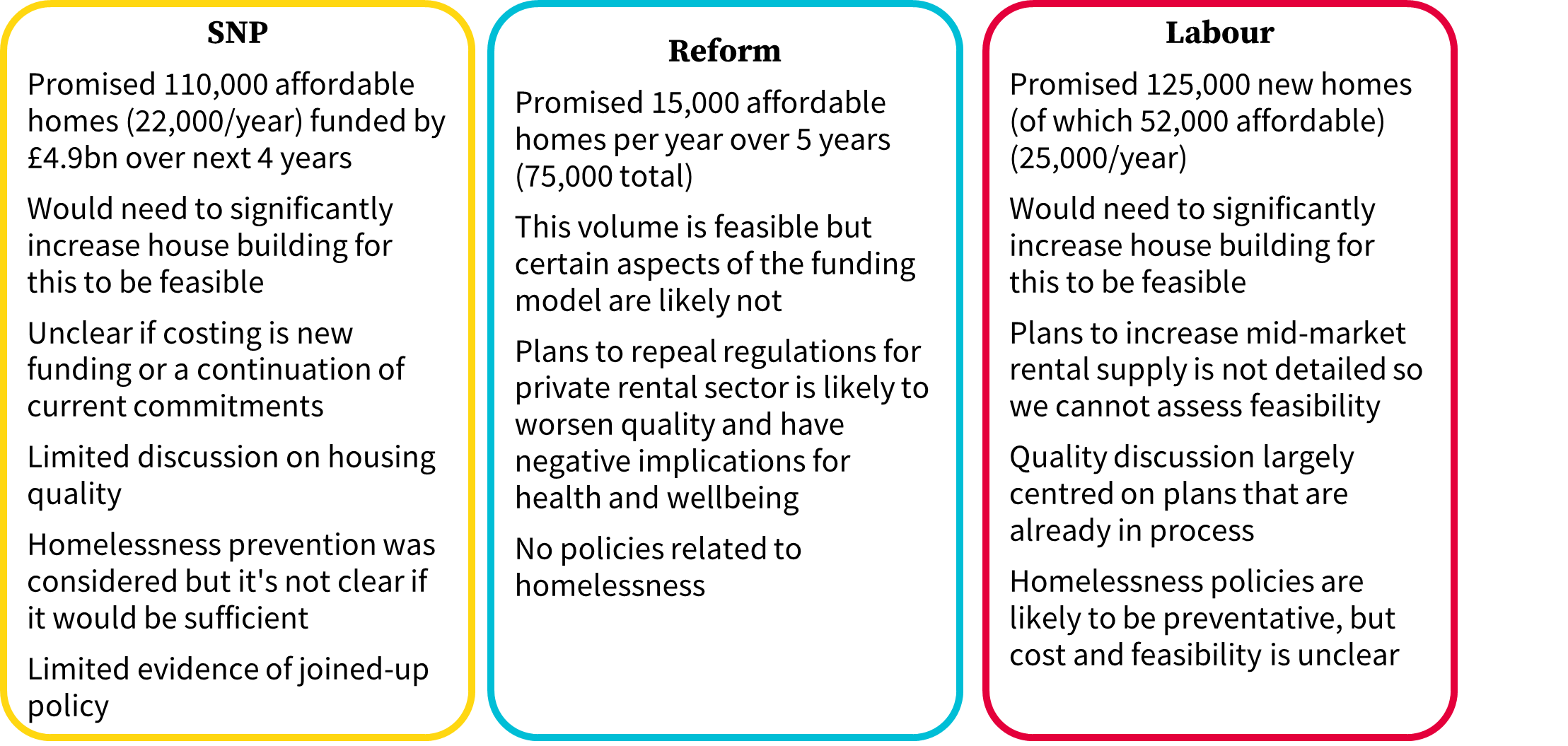
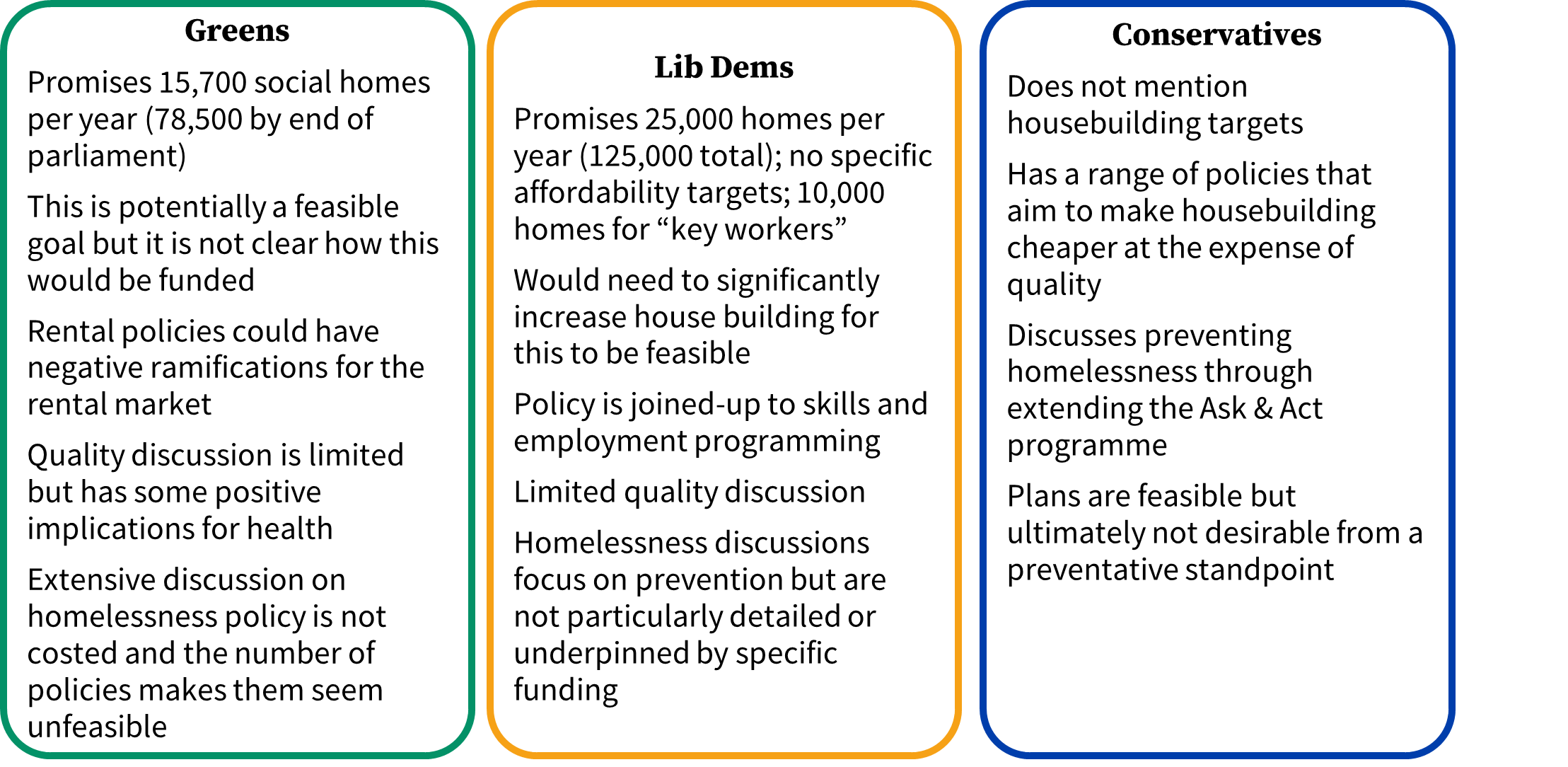
There are four lenses through which we can consider housing-related policy through the manifestos: availability, affordability, quality, and homelessness policy all of which have health implications. The availability and affordability of homes directly impact our well-being and household incomes, both of which have larger health-related ramifications. Housing quality, meanwhile, can have a direct effect on our health through things like mould, damp, and heating. People who experience homelessness, especially those who end up sleeping rough, are at risk of severe health outcomes, including higher rates of mental illness, substance dependence, infectious and chronic diseases, and a mortality risk that is around three times higher than even the most deprived housed populations.
In recent years, Scotland has struggled with a housing emergency, and in the last two years, has seen a higher volume of homelessness applications than at any point in history. With this context, it’s unsurprising that each party produced a range of policies surrounding housing and homelessness.
In general, availability and affordability discussions focused on the total and affordable housing stock, which is useful, but there is a general lack of clarity on what is meant by “affordable.” Scotland has yet to implement a standardised definition of “affordability,” a goal which was highlighted in the current government’s housing strategy document, Housing to 2040. In October 2025, a working group published recommendations on understanding affordability, but a consistent definition has yet to be implemented.
Most parties produced specific goals around the number of homes they would build annually, although the feasibility in these areas is questionable. In 2025, 17,336 total homes were completed, so it’s not clear that we have the workforce or infrastructure needed to deliver the 25,000+ homes promised by some parties.
Disappointingly, housing quality was the most overlooked across manifestos. Here, discussions largely centred on cladding remediation, community design, tenement maintenance arrangement, and disability adaptations for new builds. However, as of 2023, over 25% of households in Scotland are in privately rented housing, which is the most likely tenure to be of poor quality: in 2024, 64% of privately rented dwellings failed the Scottish Housing Quality Standard. At present, there is little legislature which effectively addresses housing quality for people living in private rented accommodation. This issue isn’t being addressed in depth by any of the parties.
Finally, homelessness discussions varied across the manifestos, but often lacked necessary details, like how programmes would be costed, or what expenditure would cover.
Party-level overview
SNP’s 2021 manifesto promised 100,000 affordable homes by 2026; as of December 2025, 32,500 have been delivered. It is also not clear whether the investment of £4.9 billion in housebuilding over the next four years is additional funding or a continuation of existing capital commitments. Looking to homelessness, the SNP discussed introducing a Homelessness Prevention Fund, worth £50 million over 10 years to “ensure people receive support before reaching crisis.” It’s worth noting that this is a relatively low investment relative to the numbers of people experiencing homelessness: in 2024/25, 34,000 people were assessed as homeless or threatened with homelessness so £5 million per year equates to approximately £147 per applicant.
Meanwhile, Reform noted that that “the proportion of 25–34-year-olds forced to live with their parents [has] increased by almost 40% since the SNP came to power.” This is misleading; while Scotland’s rate of young adults living with their parents has increased over time, it remains lower than in Northern Ireland, Wales, and most English regions (excluding East and West Midlands, Yorkshire, and the North East). Reform also promoted plans to “repeal the SNP’s regulations for all new tenancies.” It is not clear what this means but given that some regulations exist for tenant safety and security, is a potentially worrying statement. Their views on homelessness are also worrying. Half of their housing section is dedicated to blaming the current housing shortage on asylum seekers and people who cannot demonstrate a recent connection to a local authority. 9% of applicants (3,160 total) fell under the latter category in 2024/25, and letting these two groups slip through the cracks seems like a very real and direct way of worsening health outcomes for these at-risk groups. Furthermore, we have not seen any evidence that this opinion on asylum seekers is echoed by the Scottish population. We recently published a report using data from the Scottish Social Attitudes Survey which found that less than 1% of the Scottish population felt that the shortage of housing was due to it being given to migrants.
The Conservative Party took a similar stance to Reform on housing and homelessness. They stated that they would “take an axe to existing or planned [building] regulations that have increased costs in the first place” – a worrying promise when we consider regulations which make housing safer, more energy-efficient, and accessible for people with disabilities. For homelessness prevention, they discussed evaluating and potentially extending the Ask & Act programme, which requires public bodies to take reasonable steps to prevent homelessness, and which we would support. Their homelessness stance was otherwise misdirected, emphasising asylum seekers and debt as the main reasons for homelessness and the housing crisis. While debt support is certainly an important service for people dealing with housing insecurity, it’s not clear how much of a role debt actually plays in causing homelessness in Scotland; only 2% of homelessness applications in 2024/25 cited rent arrears as a reason for making an application.
At the opposite end of the spectrum, the Greens provided an extensive package of rental reforms including rent controls, extended notice periods, eviction bans, and compensation requirements, alongside raises to the land and building transaction tax and additional dwelling supplement rates. Analysis from the FAI found that, rather than improving the rental and sales market, these policies could feasibly have the opposite effect: tightening the rental market and creating a deterioration in rental quality.
Labour discussed plans to increase the supply of mid-market rentals which will “save tenants an average of £2,700 a year,” but provided no detail on where they derived this figure, what they mean by “mid-market,” nor how this will be accomplished. Encouragingly, Labour was the only party to directly discuss housing quality, promising to “fully [implement] Awaab’s Law for Scotland,” although it isn’t clear what they mean by this – Awaab’s Law, which requires social landlords to act on damp and mould within a set amount of time, is set to come into effect in October.
Finally, the Lib Dems promised to return “housebuilding to a level that will get an average of 25,000 homes built each year, supporting 87,000 high quality jobs.” This is an interesting goal, although the feasibility is questionable: completions have not been that high since 2008 with 17,336 total homes completed in 2025. Another interesting promise was to provide 10,000 homes for “key workers,” which would be determined by each local authority. The definition of “key worker” is left to local authorities to determine and would need careful consideration and engagement across industry bodies.
5. Employment and health
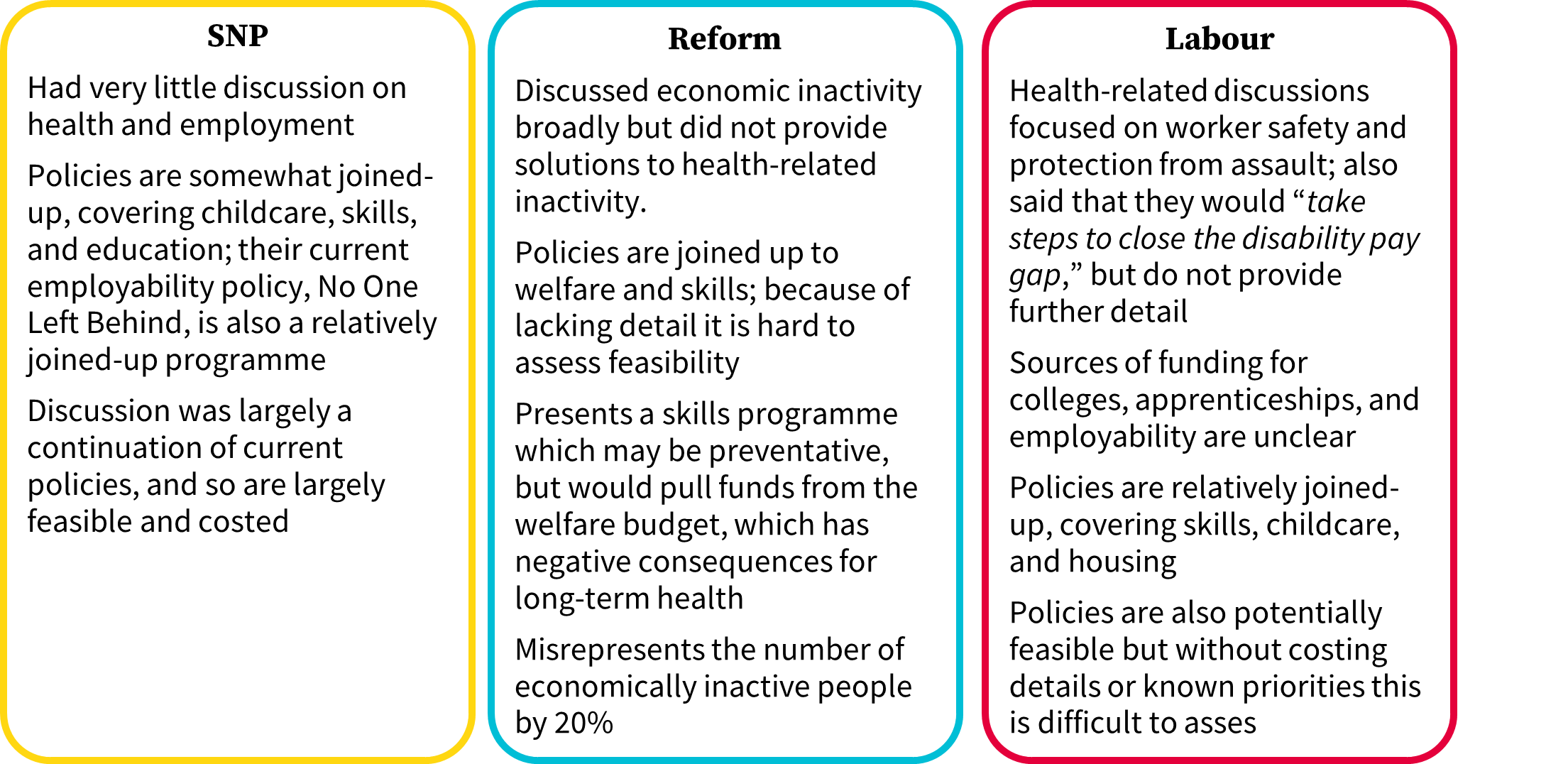
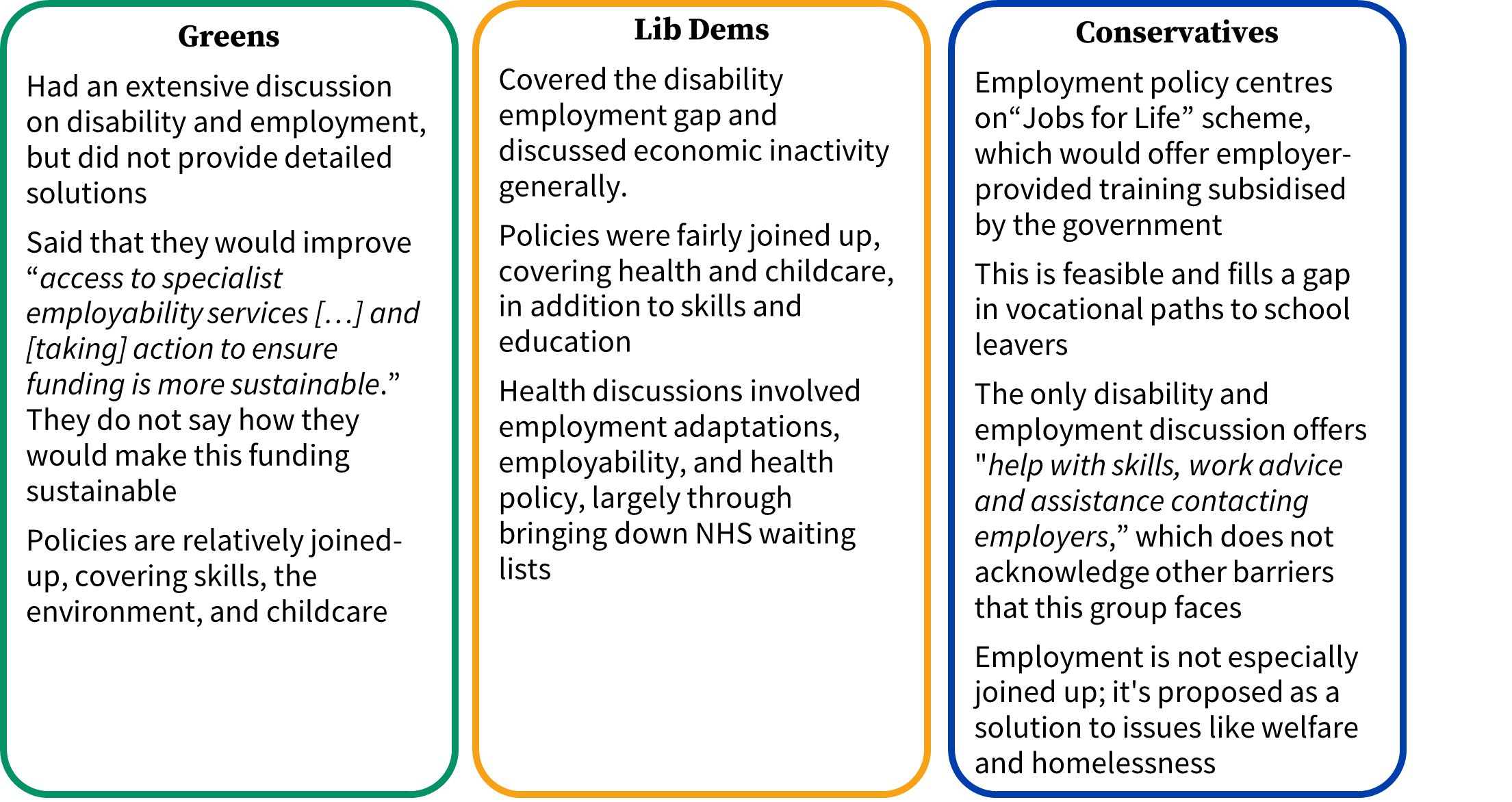
Employment and the economy, unsurprisingly, were key focuses across the manifestos, with a range of proposals aimed at improving employment rates. However, we found that there was very little discussion related to people who are out of work due to ill health or disability. This is a surprising gap, given that both the Scottish and UK governments have identified health-related economic inactivity (wherein a person is neither in work nor actively looking for work) as a priority for improving the economy overall. People who aren’t in work because of their health also make up a substantial population: in 2025, approximately 8% of the Scottish working aged population were not in work because of a health condition. This adds up to a third of all adults age 16-64 who were not employed.
Health and work interact in a range of ways: a person’s health affects their ability to work, and job quality and tasks can affect individual health. In manifestos, we might see health and work addressed in a range of ways, such as through overall workplace safety, workplace disability adaptations, engaging with employers to hire and retain staff with long-term health conditions, or through skills development and employability programmes targeted at people with long-term conditions or disabilities. Engagement with employers to support people with health conditions or disabilities was the most glaring gap, and was not discussed by a single party, in spite of it being central to keeping people in work.
Looking to employment policies more broadly, we found that these programmes were often joined up across welfare and childcare policy areas, in addition to skills and education. As with other areas, many manifestos lacked specific financial details, meaning that it is difficult to assess feasibility.
Party-level overview
Like other areas, the SNP’s offerings largely covered current policies, but given the overall health focus of the manifesto, it was again surprising to see less discussion on health and employment overall. They discussed a continuation of their fair work policy and carrying out a review on their current employability programme, both of which affect people with health conditions or disabilities. One new pledge was to create a scheme to support disabled young people into apprenticeships, as part of a broader increase in apprenticeships over the next parliamentary term.
Reform mentioned economic inactivity broadly but did not provide solutions to health-related inactivity. Most employment-related discussion was tied into welfare, with Reform promising to redirect funds from the welfare budget to create a Scottish Skills Strategy. Aside from reducing welfare funds, we do not see issues with their plans for this skills strategy overall, which outlines increases to college funding and providing better vocational paths to adults leaving secondary school. These are both good concepts, echoed by other parties. The welfare plan itself leaves much to be desired, however, which we will explore more in the next section. We do want to correct some statements about economic inactivity that they make in the welfare chapter, however. First, they say that 1 million working aged adults are economically inactive, inflating recent estimates of economic inactivity (between 778,000 and 802,000) by around 20%. They also say that “Exempting students, adult carers, early retirees and the long-term disabled leaves half-a-million Scots of working age locked out of opportunity and prosperity.” This statement is confusing, but if we exclude the named groups, we are left with 32,000 people in Scotland.
Labour focused health-related discussions under a section entitled “backing fair work,” which includes establishing a council for employment-related injuries and developing policy that would protect workers from assault. They also say that they would “take steps to close the disability pay gap,” a feat which is much easier said than done, and do not provide any further information on what this might entail.
The Greens also mentioned that they would “take steps to reduce the disability employment gap,” and they propose doing so by “improving access to specialist employability services […] and [taking] action to ensure funding is more sustainable.” Detail is not provided on how they would do this, although we would certainly welcome improvements in specialist employability support, which is a type of service designed to support disabled people and people with long-term health conditions.
The Liberal Democrats also discussed the disability employment gap and discussed inactivity generally. Their plans were fairly joined up, addressing employment adaptations, employability, and health policy, largely through bringing down NHS waiting lists. A central plan was to allow work support and adjustments to stay with the individual when they leave jobs, rather than remaining with their employer. Other plans were good initiatives, but simultaneously very specific to certain conditions and very non-specific in terms of their overall plans. They stated that that they would provide “additional support and advice to employers on neurodiversity in the workplace,” and that they would “[put] in place specialist employability programmes to enable more people with visual impairment to find work, including through new apprenticeship schemes.”
Finally, the Conservatives proposed their “Jobs for Life” scheme, an employability programme which would offer employer-provided training subsidised by the government. This scheme is modelled after a programme from Singapore and is a worthwhile way of addressing skills gaps and sectoral needs. The programme could use more detail on their disability-specific offering, however. This programme would give “those currently or previously on disability benefits […] help with skills, work advice and assistance contacting employers,” which does not acknowledge the range of barriers that this group requires.
6. Poverty, welfare, childcare, and the cost of living
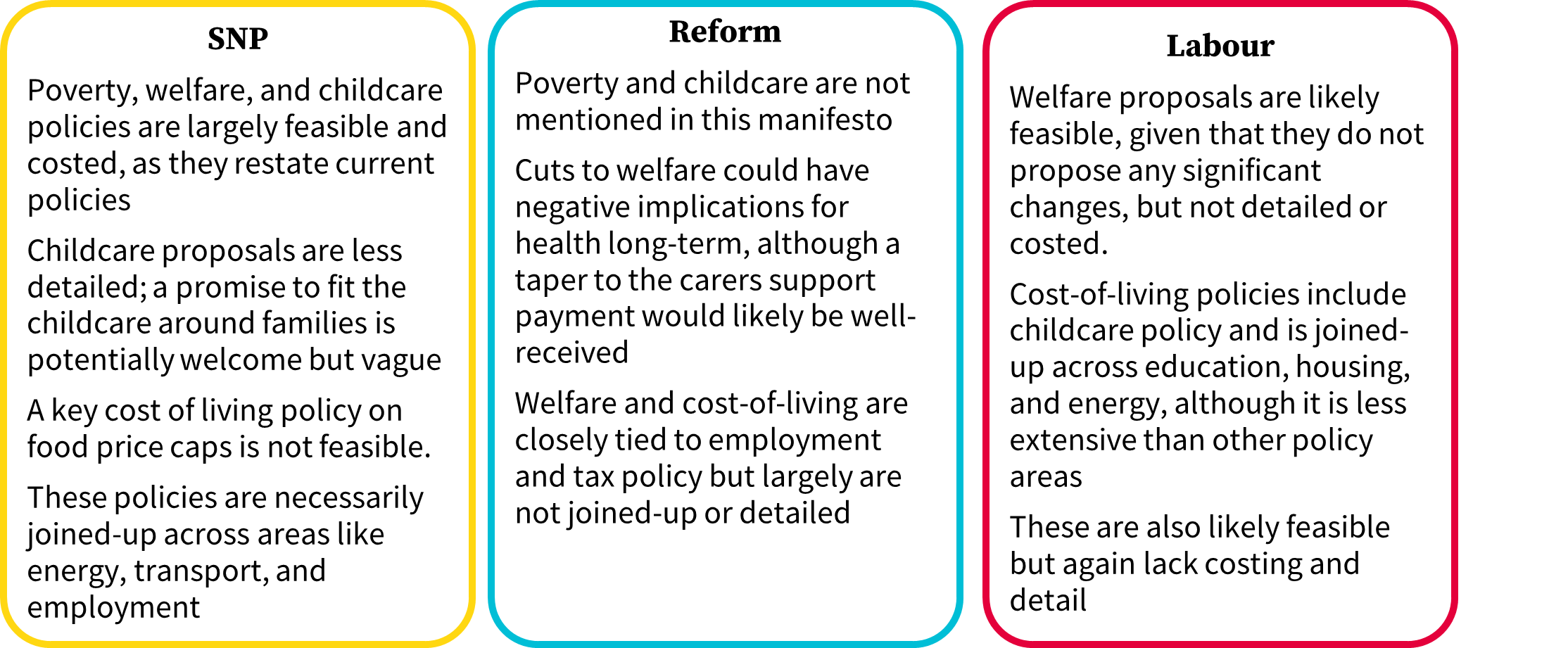
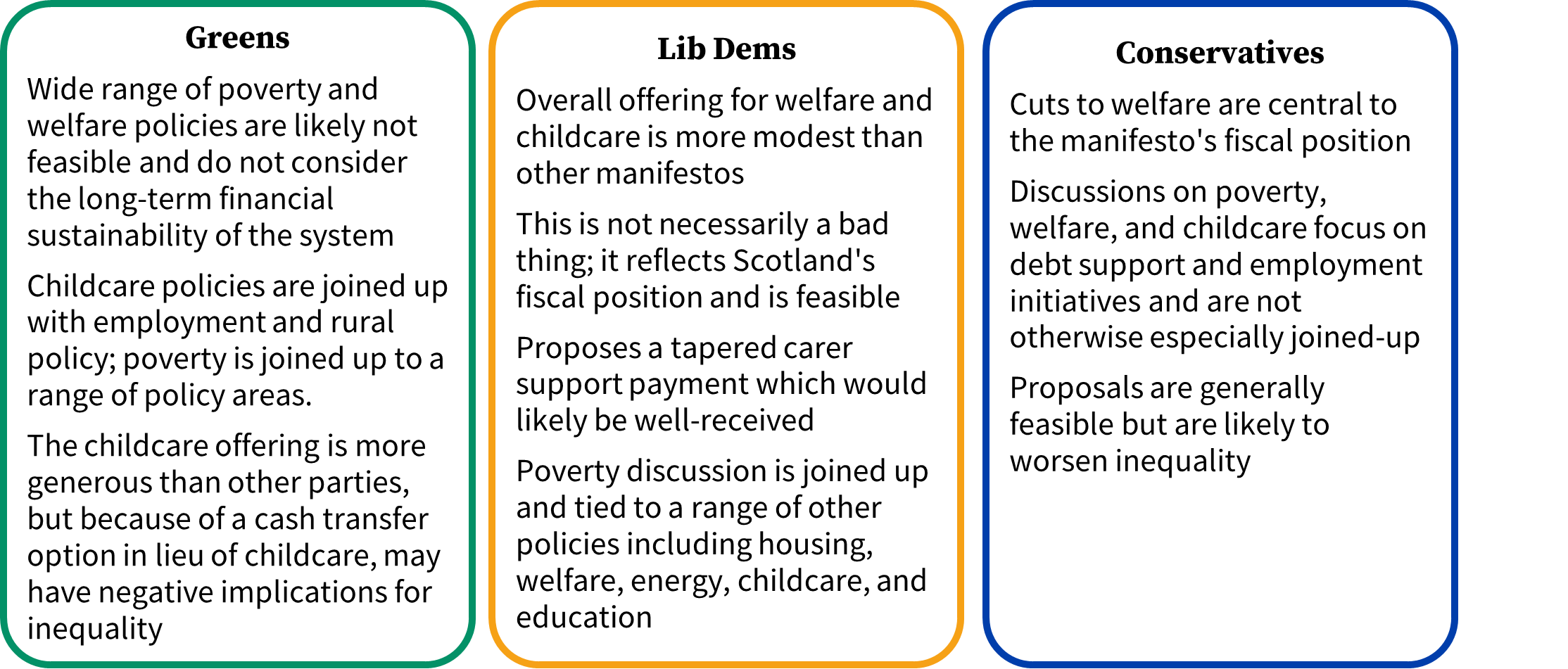
The manifestos also included discussions covering poverty, welfare, childcare, and the cost-of-living. While this is a broad subject area, they were frequently interwoven across the manifestos. They all play into household income, which is an important indicator for life expectancy.
Childcare, especially, is a cost in itself and a barrier to employment, which has further implications for household income.
We found that there were not many trends which connect the manifesto in terms of welfare and cost-of-living considerations, and that poverty discussions centred on increasing employment and growing the economy. Meanwhile, childcare approaches were more consistent, with most parties discussing some expansion to Scotland’s current funded childcare offering, which provides 3 to 5-year-olds to up to 1,140 hours of funded early learning and childcare per year. Some 2-year-olds are also eligible for funded childcare if they meet certain criteria, such as care experience either the child or guardian, or if the guardian is in receipt of certain benefits.
These policies are necessarily very joined-up throughout these manifestos: welfare, childcare, and cost of living cover areas like housing, energy, employment, education, and transport, among other areas. Health itself was not a strong feature of these discussions, however.
Party-level overview
To start, much of the SNP’s poverty and welfare discussion focused on policies that are already in place, focusing on the government’s child poverty programme of work and goals in that area. For instance, one promise was that they would increase the Scottish Child Payment to £40 per week for children under one, which was already announced earlier this year. SNP has promised to expand the current funded childcare offering to all children aged 9 months and up “by the end of next parliament.” They have also promised that the “new system will be designed to fit around families.” It is not clear what this will entail, but we would certainly welcome a system which is more understanding of parents that have non-traditional work patterns. SNP’s discussion on the cost of living covered a lot of territory, including transport, employment, energy, and tax. Their manifesto introduced a surprising policy in the form of “price ceilings on a basket of 20 to 50 essential food items at large supermarkets.” There is not detail on what these items might be, but is almost certain to fail – as the FAI notes, “It’s almost certain that the Scottish Government does not have the powers to implement this policy,” whether through the Internal Market Act, or through litigation from the “large supermarkets” that would be impacted by this rule.
Moving to Reform, we found that the manifesto did not mention the word “poverty” at any point, nor do they discuss childcare. With regards to welfare, Reform’s aim is to reduce costs, noting that both social security and administering benefits are expensive. As a result, Reform proposed increasing face-to-face assessments for social security, which is likely to be a deterrent for some people receiving benefits, although it’s not clear how much this would actually save. One proposal – tapering the carer support payment – would probably be well-received by organisations advocating for carers but would certainly cost more money than it currently does. They propose to address the cost of living largely through their policies to address employment and reduce taxes but have little else that would fall under this policy space.
Labour’s proposals covering poverty focus on improvements to employment and the economy. Their statements on welfare suggest that they would largely maintain the current system with an aim to improve efficiency. A central policy feature targets parental employment and would provide colleges with funding to provide training to parents to fill specific local skills gaps. Like other policies, however, this isn’t especially detailed; for instance, childcare and transport are also important barriers to parental employment, and it’s not clear how this policy would provide a better provision to parents than what colleges currently offer. There are a range of childcare and child-poverty related provisions throughout this manifesto, in which they say that they seek to “improve the flexibility of the childcare system.” Policies include breakfast clubs in primary schools, addressing school meal debt, establishing a family network hub in primary schools based on Sure Start, debuting funded “holiday clubs,” and increasing the value of tax-free childcare from £2,000 to £3,000 per child. As with other aspects of Labour’s manifesto, these are uncosted and it is not clear which policies would be prioritised. Childcare folds into Labour’s cost-of-living discussion, which is not extensive, and also covers housing and energy.
The Greens had a substantial list of proposals related to poverty and welfare, although again without any discussion on the long-term sustainability of these systems. Among other relevant proposals, the Greens aim to increase the Scottish Child Payment to £55 by 2030 for eligible children. Their proposals on childcare are the most universal and generous out of any party, offering a package of 1,140 funded hours to all two-year-olds and 570 funded hours for all children aged six months to two years by 2031. Instead of this provision, parents would be able to opt into a cash transfer, which might mean that parents who most need that money don’t send their children to childcare. This in turn could potentially widen inequalities because these children aren’t accessing an early form of education and socialisation. The Greens’ cost of living discussion covered a range of policies including rent prices, energy, and transport, in addition to childcare. They also propose negotiating “with the UK Government to secure the powers to introduce a Universal Basic Income (UBI) pilot,” which effectively allows them to propose it while not being obligated to deliver on it. Given that this is a hugely expensive policy, and that they have given no indication of where the funds would come from, this seems like a generally undeliverable policy anyway.
The Liberal Democrats’ poverty discussions focused on unpaid carer support, housing, and employment, and fitted into their discussions on welfare. The welfare offering from the Lib Dems was a bit more modest than some of the other parties, largely centring on uplifting carer support payments and tapering off earnings so that carers don’t face a cliff edge, similar to Reform’s calls. Similarly, childcare offerings are less generous than other parties, with the Lib Dems proposing to shift the 1,140 funded childcare hours to start on a child’s third birthday, rather than the term after the child’s third birthday, a proposition which would increase this start date by up to 5 months. This change would be prioritised for working parents. The fact that these policies are less generous than other parties isn’t necessarily a bad thing – Scotland faces a challenging fiscal position and reasonable adjustments to the welfare system is an appropriate direction to take. Finally, cost of living policies, like other parties, were largely tied to general economic growth and energy bills.
The Conservative Party’s poverty proposals largely focused on increased employment support and training, along with debt advice, as we covered under Housing and Homelessness. While they said that they would support the current government’s child poverty targets for 2030, they did not discuss how they would meet these. Cuts to welfare, however, are central to the Conservatives’ fiscal package. Proposals include introducing a two-child limit on the Scottish Child Payment and tightening Adult Disability Payment eligibility. The two-child limit was previously a policy in which families with more than two children were not entitled to additional Universal Credit benefits. This policy was generally viewed as problematic, and removing it was largely seen as a positive step in reducing child poverty. It’s therefore difficult to support a similar policy in Scotland and it contradicts their position on supporting child poverty targets. The Conservatives also propose expanding free childcare to working parents of children over 9 months old. The working requirement creates something of a catch-22: there will necessarily be parents who can’t work because they can’t afford childcare but can’t get free childcare without a job. Their discussions on the cost of living were tied to general economic growth and reduced taxation, as well as a long discussion on removing costs for people who have cars, like low emission zones and car park taxes.
Final thoughts
In our annual Inequality Landscape report, we included a chapter on preventing deaths from drugs, alcohol, and suicide, particularly among young adult men. For that report, we identified a range of actions that Scotland can take to reduce these premature deaths.
These were:
Improve our understanding of at-risk individuals, through
- Prioritising person-centred data rather than continuing to gather and hold data in separate service and policy siloes,
- Creating better data on people from minority ethnic communities,
- Building the infrastructure for evidence-led action, and
Developing long-term, cross-governmental policies and strategies, through
- Long-term funding for organisations delivering preventative programmes, and
- A long-term infrastructure that supports horizontal and vertical collaboration to oversee delivery and implementation
These themes were largely present across the manifestos. All parties, except for SNP, discussed improvements to data gathering, although in some cases it was specific to certain policy areas. All parties discussed long-term funding settlements, either for councils or third sector organisations. And all parties, except for Reform, discussed cross-government working, although this was again sometimes covered under specific policy areas.
Of course, all of these things are easier said than done.
This brings us to the Programme for Government, which the Scottish Government typically releases in September, although this may change given the election cycle, and which will outline the new government’s top priorities for the year. While it seems likely that SNP will remain in charge, whether or not they form a coalition government, or incorporate ideas from other parties’ manifestos remains to be seen.
When it’s released later this year, we will explore whether or not the PfG aligns with these recommendations.
To stay on top of this, sign up to our mailing list here.